Argentina march on thanks to Messi-oriented tactics. But cracks are starting to show - The Athletic
Argentina’s current build is Messi-oriented by design: set pieces, delayed runs, and late-box manipulation remain the cleanest routes to high-value chances.
Messi is still the system’s highest-usage action point
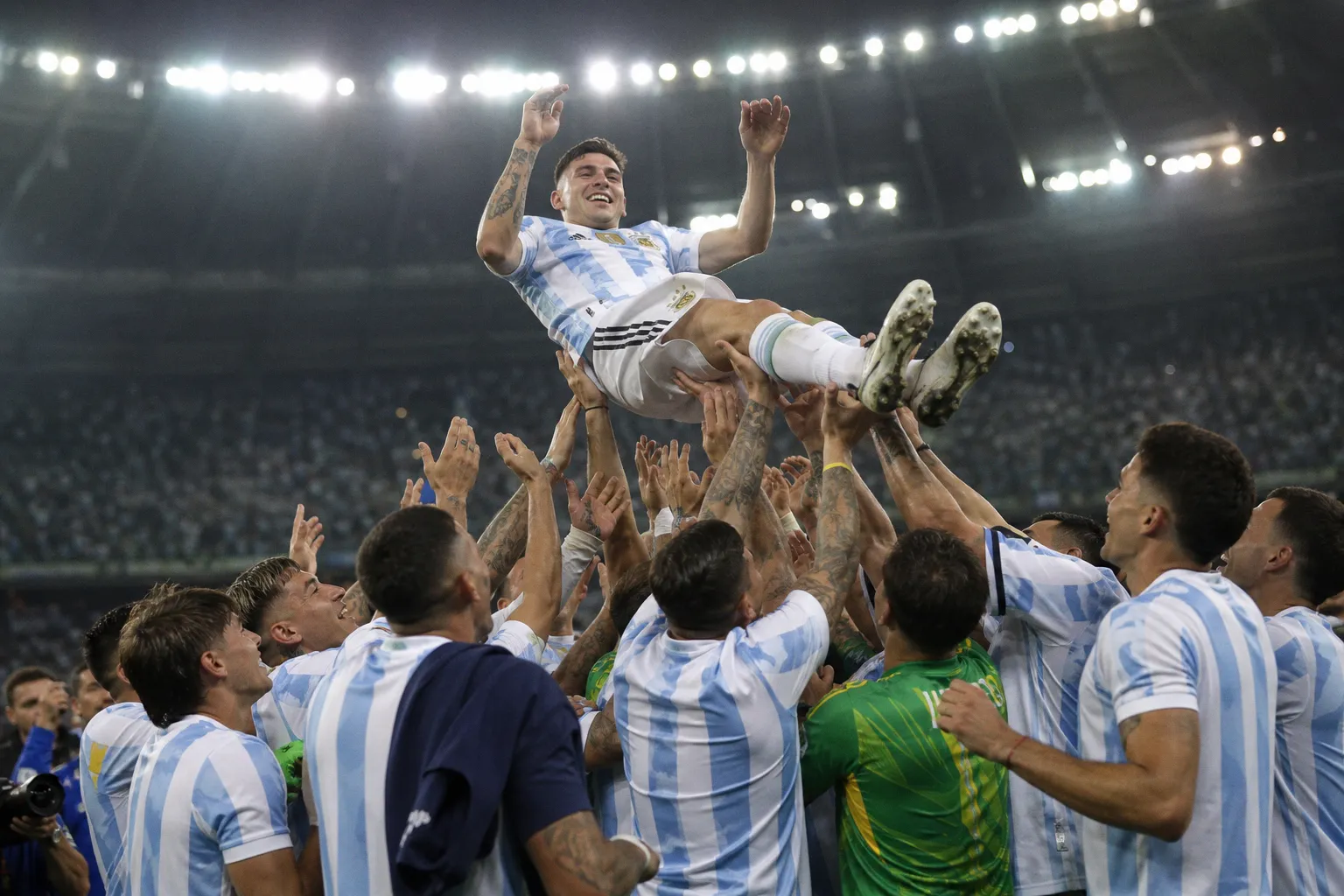
The evidence is not subtle. Against Egypt, Argentina were 2-0 down with 78 minutes on the clock before Messi created the first goal, finished the second four minutes later, and Enzo Fernandez headed in the stoppage-time winner. The source describes that comeback as the latest a team has staged from that deficit inside 90 minutes in tournament history.
The prior round followed the same tactical dependency. Argentina beat Cape Verde 3-2 after being pegged back twice, with two outswinging Messi corners in extra time leading to two goals. Earlier in that match, Messi’s open-play goal came from timing rather than volume: he walked back from an offside position to avoid being tracked, then sprinted onto Lisandro Martinez’s ball over the top, controlled with one touch and finished with the next.
That sequence is the useful coaching clip. It is not just “individual quality.” It is defender manipulation, blind-side timing, and acceleration from a deliberately passive starting posture. At 39, Messi is not being used as a constant presser or touchline runner. Argentina are preserving him for the possessions that change shot quality.
The transition defence is the red flag
The concern is what happens when Argentina lose the ball with structure tilted toward Messi’s delivery zones. The Athletic’s account of the Egypt match points to a lack of athleticism in midfield when Egypt countered in Atlanta.
One sequence began with Julian Alvarez trying to trigger a counter-press after Martinez lost possession near the corner flag while boxed in two-vs-one. Egypt progressed through Haissem Hassan, who carried into the final third past Enzo Fernandez, then found Mohamed Salah. Salah split two defenders to play Mostafa Ziko, who chipped Emiliano Martinez. That goal was later disallowed by VAR for a foul earlier in the move, but the tactical warning survived the decision.
Nine minutes later, the same stress point appeared again. A Messi inswinging corner was headed clear, Salah found space to lead the counter, Leandro Paredes made a recovery run but mistimed the tackle, and Egypt worked the ball back to Hassan near the box. Even with a four-vs-three overload in Argentina’s favour, they allowed Hassan too much room to reach the byline and create the cutback for Ziko’s finish.
That is not a one-off clearance problem. It is rest-defence spacing, recovery angles, and the first five seconds after loss. When the midfield cannot immediately compress the ball-carrier, Argentina’s centre-backs are forced to defend running lanes rather than set positions.
What this means for Argentina’s ceiling
Argentina’s macro record still grades out strongly: the report notes 12 straight wins, only four defeats in the four-year cycle since the 2022 World Cup, and a 2024 Copa America title won after conceding just once in six matches. Messi is also leading the golden boot race with eight goals, one ahead of Kylian Mbappe and Erling Haaland.
But knockout football punishes asymmetry. Argentina’s attack has a reliable late-game lever: Messi on corners, Messi between markers, Messi as the final-third reference point. The defensive model is less clean when opponents can escape the first pressure and attack the exposed half-spaces before Argentina reset.
For players and coaches watching from below the elite level, the lesson is practical. A star-centric system can be efficient if the team builds clear rules around second balls, counter-press triggers, and rest-defence coverage. Argentina have the match-winner. The question now is whether the supporting structure can keep the pitch small enough for his interventions to remain decisive.