Compare the 5 best NBA legends for a modern small-ball lineup
Here's the problem every modern front office is trying to solve: how do you build a five-man unit that can switch everything, space the floor to half court, and still punish you in transition…
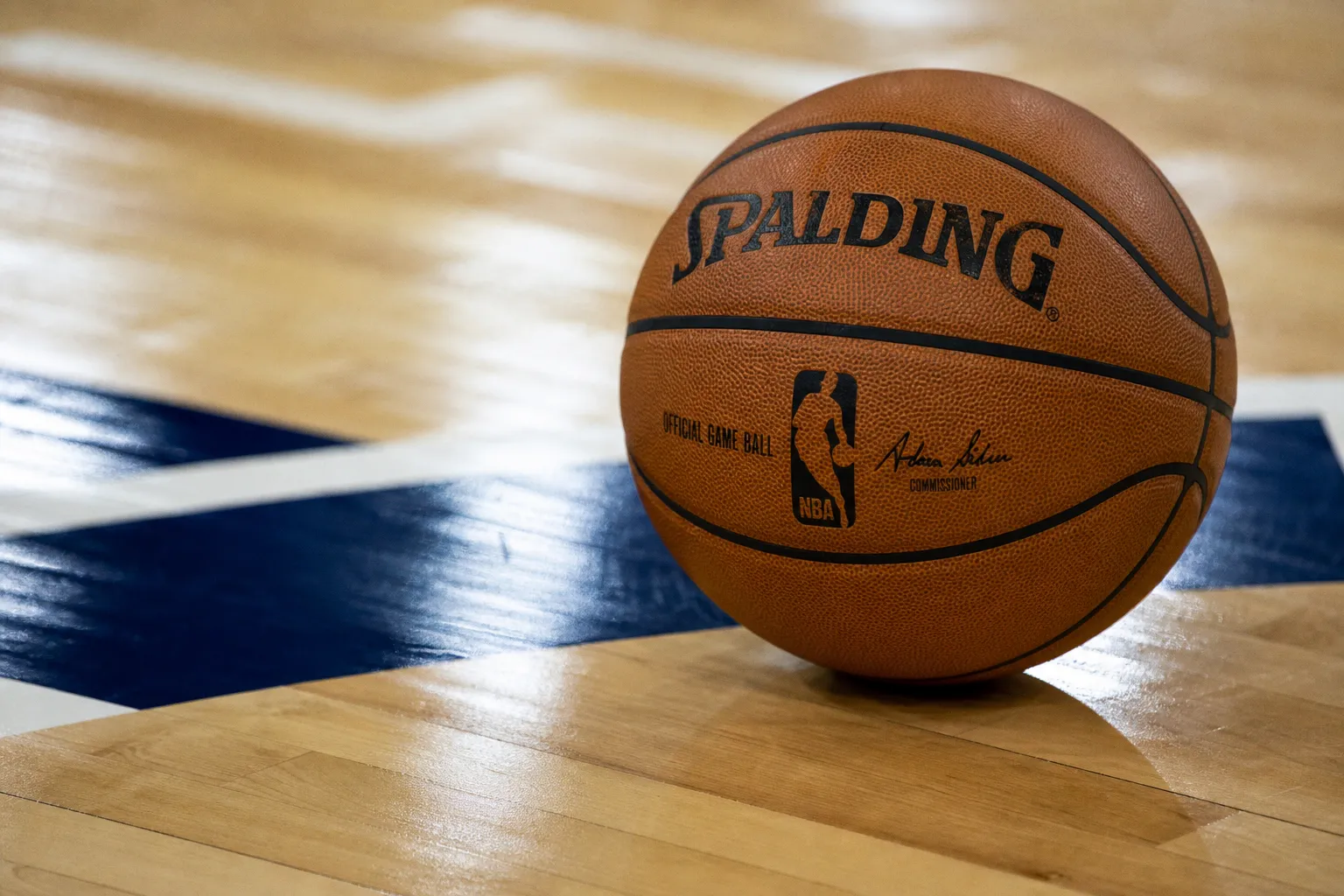
Building the Ultimate Positionless Roster: Top 5 NBA Icons for Today's High-Pace Game
Here's the problem every modern front office is trying to solve: how do you build a five-man unit that can switch everything, space the floor to half court, and still punish you in transition — without getting bullied on the glass?
The "Death Lineup" isn't a theory anymore. Golden State proved it in 2015, and it broke the league. Now every contender runs some version of positionless basketball, hunting for that perfect blend of length, IQ, shooting, and defensive range. But what if you could pull from every era? Strip away the timeline, grab five legends at their peak, and plug them into today's pace-and-space system?
That's the drill here. I'm running a full roster breakdown — five NBA legends who'd thrive in a modern small-ball scheme. No nostalgia picks. No "he was great in his day" nonsense. Every name on this list earns the spot because the skillset translates to right now: 42.6% three-point efficiency, switching across all five positions, transition kill-speed, and the kind of basketball IQ that doesn't need a coach drawing it up.
Let's get to work.
---
The Perimeter Engine: Stephen Curry's Gravity and Spacing
You can't build a modern small-ball unit without the single most valuable offensive weapon in basketball history. Full stop.
Stephen Curry changed what spacing means. His career 42.6% three-point shooting on absurd volume isn't just a stat — it's a gravitational field. Defenders follow him past half court. That's not hyperbole; that's film. When Curry relocates off a pin-down, the entire defense tilts. One man warping five opponents. The math is devastating.
In a small-ball scheme, Curry does two things simultaneously:
- He stretches the floor vertically. Bigs can't sag into the paint. Driving lanes open like floodgates for LeBron or anyone else attacking downhill.
- He punishes overcommitment instantly. Go under a screen? Three. Switch a big onto him? He pulls from 30 feet before the mismatch even registers.
The knock has always been defense. Sure. Curry's not locking anyone down in isolation. But in a switching scheme with Garnett, Pippen, and Draymond behind him, he doesn't have to. He funnels his man into help, stays disciplined in team concepts, and his hands are active in passing lanes. That's enough. In this lineup, "enough" on defense paired with generational on offense is a net positive by a mile.
Curry doesn't just space the floor — he rewrites the geometry. You literally cannot play drop coverage against this lineup, because the guy at the logo is shooting 42.6%.
He's the engine. Everything else runs because of him.
---
The Point-Forward Blueprint: LeBron James as the Universal Connector
If Curry is the engine, LeBron James is the transmission. The guy who makes every gear mesh.
Career numbers: 27.1 points, 7.5 rebounds, 7.4 assists per game. Top five all-time in assists — as a forward. Let that sink in. He's not a point guard distributing from the perimeter. He's a 6'9", 250-pound freight train who reads the floor like a quarterback and finishes like a power forward. That combination doesn't exist anywhere else in basketball history.
Here's why he's the foundational piece for any small-ball unit:
Offensive versatility. LeBron can initiate the offense from the top of the key, post up smaller wings, run pick-and-roll as the ball handler, or finish as the roll man. In a five-out system, he's the guy who collapses the defense and kicks to Curry, Pippen, or Garnett on the perimeter. He turns a good offense into an unguardable one.
Defensive switching. Prime LeBron — let's say 2013 Miami LeBron — could guard one through five. Point guards, shooting guards, small forwards, power forwards, and even some centers. That's the switching backbone this lineup demands. He's got the lateral quickness to stay with guards and the strength to body up bigs in the post.
Transition kill-speed. LeBron in the open floor is a cheat code. Grab a rebound, push it himself, and you're looking at a 4-on-3 or 3-on-2 before the defense even crosses half court. In a lineup built around pace, he's the guy who turns defensive stops into instant points.
| Attribute | What LeBron Brings | Why It Matters in Small-Ball |
|---|---|---|
| Playmaking | 7.4 APG career avg | Eliminates need for traditional PG |
| Size | 6'9" / 250 lbs | Switches 1-5 without size penalty |
| Transition scoring | Elite open-court finisher | Maximizes pace-and-space philosophy |
| Rebounding | 7.5 RPG career avg | Compensates for undersized lineup |
| Basketball IQ | Reads all defensive schemes | Orchestrates rotations in real-time |
He's not just a piece of this lineup. He's the skeleton. Remove him and the whole structure gets wobbly.
---
Defensive Versatility and the Switchable Big: Kevin Garnett's Prototype
Before Draymond Green made "switchable five" a buzzword, Kevin Garnett was living it.
Six-foot-eleven. Seven-foot wingspan. Lateral quickness that didn't make sense for his frame. KG could hedge a pick-and-roll on the perimeter, recover to contest a shot at the rim, and then sprint the floor for a transition bucket — all in one possession. Career 1.4 blocks, 1.3 steals per game. Defensive Player of the Year in 2008. Those numbers don't capture what the film shows: a guy who quarterbacked an entire defense with his voice and his feet.
In a modern small-ball lineup, Garnett is the anchor. He's the center — but he doesn't play like one.
- Perimeter switchability. Guards can't hunt him on switches. He slides his feet, stays low, contests with length. The mismatch doesn't exist.
- Mid-range gravity. KG's elbow jumper was automatic. In a five-out scheme, that means his defender can't sag into the paint. Another layer of spacing.
- Rim protection without fouling. He didn't need to block everything — his positioning and timing deterred shots before they went up. Verticality and discipline.
- Vocal leadership. You can't run a switching defense with five quiet guys. Garnett barked every rotation, every screen, every assignment. He was the defensive coordinator on the floor.
Garnett wasn't just ahead of his time — he was playing a different sport. Every switchable big in today's league is borrowing from his playbook.
The one question is spacing from deep. Garnett wasn't a three-point shooter. But in a lineup with Curry, LeBron, and Pippen, he doesn't need to be. His mid-range gravity and defensive ceiling more than cover it. He's the defensive foundation this unit stands on.
---
The Draymond Green Effect: Playmaking from the Five Spot
Draymond Green is the most misunderstood player in modern NBA history. People see the box score — 7 points, 7 rebounds, 6 assists — and shrug. Those people aren't watching the game.
What Draymond does is connect. He's the hub of a read-and-react offense, the guy who catches the ball at the top of the key and makes the decision that determines everything. Short roll? Kick to Curry. DHO to Pippen? Lob to LeBron cutting baseline? He processes the game two passes ahead, and he does it from the five spot.
Defensive Player of the Year in 2017. He's guarded every position in the league — from Chris Paul to Anthony Davis. In the Warriors' original Death Lineup, he was the reason it worked. Not Curry's shooting. Not Klay's defense. Draymond's ability to be the defensive quarterback and the offensive connector simultaneously.
Here's his value in this specific five-man unit:
- As a secondary playmaker alongside LeBron. Two high-IQ passers on the floor at all times. The ball never sticks.
- As a switching hub. He can guard 1-5, which means no weak link in the rotation. Every screen gets switched. No breakdowns.
- As the emotional engine. He plays with controlled fury — the kind of intensity that raises the floor for everyone around him.
The limitation? Shooting. Career 31.5% from three. In a lineup with Curry and LeBron, you can live with it — but it's a constraint. Defenses will help off him. The counter is his cutting, his screening, and his decision-making in the short roll. If you leave him alone with the ball, he'll make you pay — just not from deep.
He's the connective tissue. Not flashy. Absolutely essential.
---
Lockdown Wing Integration: Scottie Pippen's Role in Positionless Defense
You want one guy who can lock up the opponent's best perimeter player and run the break and hit open threes? Scottie Pippen is that guy.
Six-foot-eight. Seventy-eight-inch wingspan. Quick-twitch athlete who moved like a guard and hit like a forward. Pippen was guarding Magic Johnson in the Finals, chasing Reggie Miller off screens, and bodying Charles Barkley in the post — sometimes in the same game. He's the prototype for the modern two-way wing.
In this lineup, he fills the role that every championship team desperately needs: the elite perimeter stopper who doesn't sacrifice offensive value.
- Lockdown perimeter defense. He can take the toughest assignment every night. Curry doesn't have to guard the best guard. LeBron doesn't have to chase the best wing. Pippen absorbs that load.
- Secondary playmaking. Pippen was a point forward before the term existed. In the 1990s Bulls system, he initiated offense regularly. In a modern scheme, he's another ball-handler, another decision-maker.
- Transition scoring. He ran the floor like a track star. In a pace-and-space lineup, he's the guy leaking out for easy buckets after defensive stops.
- Three-point shooting. Not elite, but respectable and improving throughout his career. In this lineup, he doesn't need to shoot a high volume — just knock down the open ones that Curry's gravity creates.
Pippen is the glue guy. The one who doesn't need plays called for him, who defends the hardest assignment, and who makes everyone else's job easier. You can't build a championship-caliber small-ball unit without someone willing to do the dirty work at an elite level.
---
Tactical Synergy: How This Five-Man Unit Redefines Modern Transition Play
Let's put it all together. Here's what this lineup looks like on the floor:
Offensive identity: Five-out, read-and-react, transition-first.
Curry spaces to the logo. LeBron operates from the high post or initiates pick-and-roll with Garnett. Draymond sits at the nail as the short-roll decision-maker. Pippen lurks on the weak side, ready to cut or spot up. Every player can pass. Every player can finish. There's no weak link in the half court — and in transition, this unit is lethal. LeBron pushing, Curry filling lanes, Pippen leaking out, Garnett running the rim, Draymond trailing for the outlet. Five guys who can handle, pass, and score in the open floor.
Defensive identity: Switch-everything, no mismatches.
Every screen gets switched automatically. No hedges, no drops, no rotations to cover a blown assignment. Garnett protects the rim. Pippen and LeBron lock the perimeter. Draymond quarterbacks the scheme. Curry hides on the least dangerous offensive player and conserves energy for the other end.
| Player | Offensive Role | Defensive Role | Key Metric |
|---|---|---|---|
| Stephen Curry | Primary spacer / off-ball scorer | Team-concept defender | 42.6% 3PT career |
| LeBron James | Initiator / slasher / facilitator | Switchable 1-5 | 27.1/7.5/7.4 career |
| Kevin Garnett | Mid-range hub / rim runner | Anchor / shot-blocker | 1.4 BPG, 1.3 SPG career |
| Draymond Green | Short-roll playmaker / screener | Defensive QB / switchable 1-5 | DPOY 2017 |
| Scottie Pippen | Transition scorer / secondary creator | Primary perimeter stopper | Elite defensive versatility |
The tradeoff you accept.
Two non-shooters from deep (Garnett and Draymond) can compress spacing in the half court. That's real. Teams will dare them to shoot and load up on Curry and LeBron. The counter? This lineup generates so many transition opportunities and off-ball actions that half-court stagnation barely happens. You're playing at a pace where the defense can't get set, and when they do, you've got LeBron and Curry operating in space. Good luck.
There's no consensus "greatest small-ball five ever" — that's acknowledged. The unknown is whether pure offensive firepower or defensive switching capability matters more across different eras. But I'll take this unit against any configuration anyone else can name. The balance is too clean. The versatility is too complete.
The verdict?
This five-man lineup doesn't just fit modern basketball — it defines it. Curry's gravity, LeBron's omniscience, Garnett's defensive range, Draymond's connectivity, Pippen's two-way glue. Every piece covers the weaknesses of the others. Every skill amplifies the guys around it.
Build this roster. Watch it work. There's no weak link to hunt, no mismatch to exploit, and no defensive scheme that solves it. That's the whole point of positionless basketball — and these five are the best to ever do it.
As coverage of these kinds of deep basketball analysis and athlete profiles continues to expand across sports media, outlets like Lefty Magazine are also pushing boundaries in how we examine the cultural and social dimensions surrounding elite athletes and their legacies beyond the court.
If I'm picking five for a modern small-ball war room, this is the roster. No hesitation. No second-guessing. Lock it in.
Read also
 Athlete Lifestyle & GearEvaluate if WHOOP 4.0 monthly fees justify pro athlete data
 Football IconsMessi vs Ronaldo: Evaluating Peak La Liga Performance Metrics
 World Cup is a shop window for these USMNT players, post-tournament moves possible - The Athletic
 Tennis Grand SlamOptimize string tension for clay versus hard court surfaces