Highest paid athletes of all time: the definitive ranking
The decisive moment in an athlete’s financial career rarely arrives at the instant of the trophy lift.
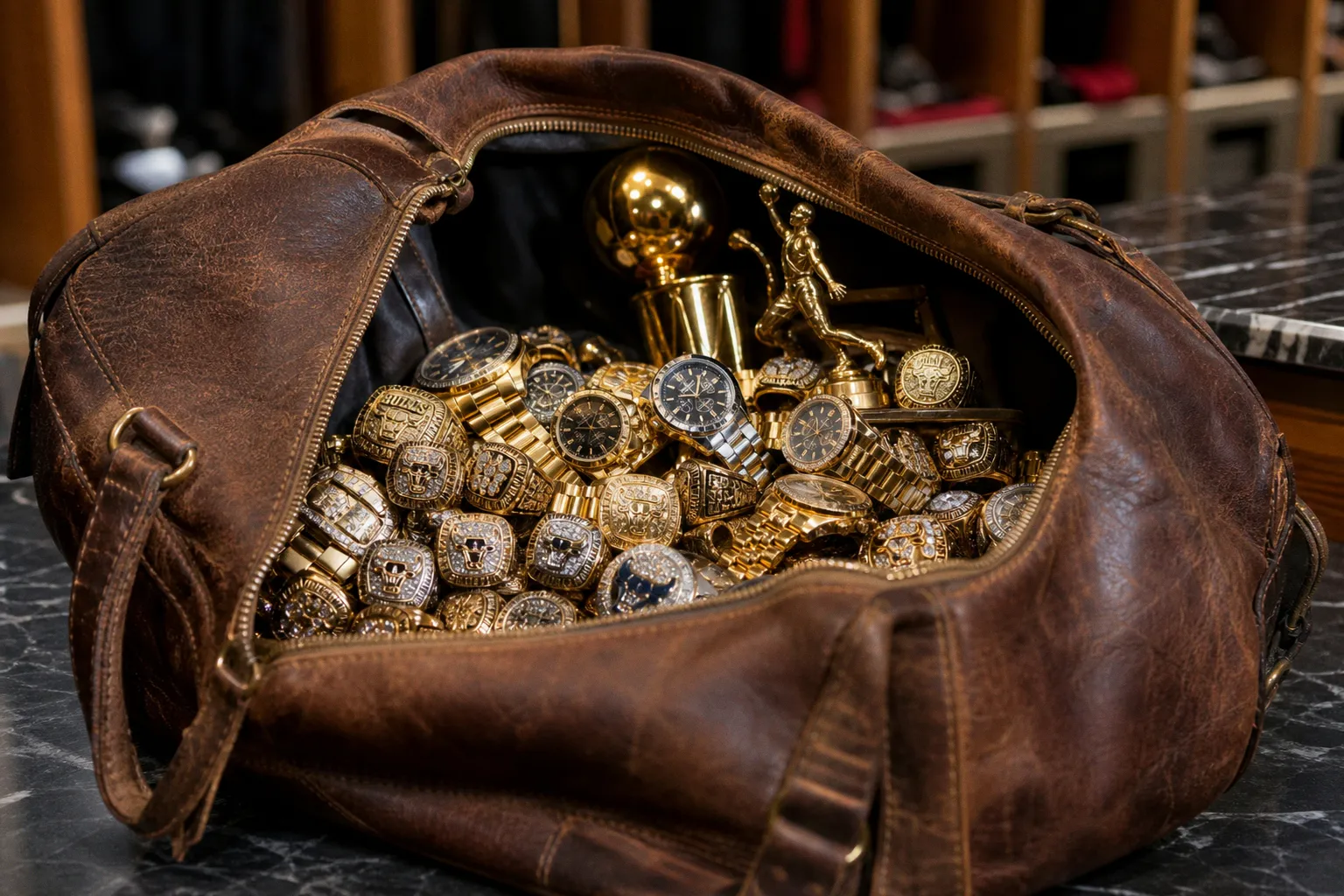
It arrives when performance becomes a language that can travel without the athlete: onto a shoe, a watch dial, a video game cover, a golf course, a licensing contract, or an equity ledger. That is why the current all-time earnings table looks less like a record of salaries than a study in endurance—of body, image, timing, and commercial nerve.
The latest inflation-adjusted estimate of the highest paid athletes of all time puts Michael Jordan at $4.50 billion in career earnings through December 31, 2025. Tiger Woods follows at $2.88 billion; Cristiano Ronaldo is third at $2.52 billion. Those figures are arresting, but they require a little composure before interpretation. They are not net worth, not post-tax wealth, and not merely sporting paychecks. They are estimates of realized career income across salaries, prize money, bonuses, endorsements, royalties, licensing, appearance fees, media work, memorabilia, and selected equity events.
In other words: this is not a list of who was paid most to play. It is a map of who learned to make elite performance commercially reproducible.
The $56 Billion Club Is Not a Salary Table
The 50 athletes in the current ranking generated an estimated $56.2 billion in inflation-adjusted earnings, compared with $40 billion in nominal dollars. That adjustment matters enormously when placing a golfer whose peak came decades ago beside a footballer whose social reach now operates in real time, every day, across several continents.
The ranking spans 10 sports and 17 countries. Basketball supplies 13 names, golf eight, and boxing seven. Their shared presence is revealing. Each sport gives the athlete an unusually legible individual identity: a golfer alone over a putt, a boxer alone under the lights, a basketball player whose silhouette can become a global mark. Team sports can create vast audiences, certainly, but individual recognizability is what turns a career into a long licensing runway.
Here is the top 10 in the current inflation-adjusted all-time athlete income rankings:
| Rank | Athlete | Estimated career earnings, inflation-adjusted | The commercial engine |
|---|---|---|---|
| 1 | Michael Jordan | $4.50 billion | Endorsements, licensing, brand architecture |
| 2 | Tiger Woods | $2.88 billion | Sponsorship, golf visibility, appearance value |
| 3 | Cristiano Ronaldo | $2.52 billion | Global football reach, endorsements, personal brand |
| 4 | LeBron James | $2.03 billion | NBA earnings, media, endorsements, equity |
| 5 | Lionel Messi | $1.99 billion | Football earnings, sponsorship, equity interest |
| 6 | Arnold Palmer | $1.85 billion | Golf, endorsement pioneering, course design |
| 7 | Jack Nicklaus | $1.83 billion | Golf, course design, licensing |
| 8 | David Beckham | $1.68 billion | Football image rights, licensing, brand deals |
| 9 | Roger Federer | $1.67 billion | Tennis endorsements, premium brand alignment |
| 10 | Floyd Mayweather | $1.57 billion | Fight purses, event control, promotion |
The table is necessarily imperfect. Career totals are estimates rather than audited personal financial statements, and the underlying calculations do not offer a universal, athlete-by-athlete split between competitive earnings and commercial income. Still, the larger pattern is unusually clear: sporting brilliance creates attention; commercial structure determines how much of that attention remains valuable after the final peak.
The richest athletic careers are not simply the longest. They are the ones whose value keeps moving after the body has stopped moving at full speed.
That distinction is particularly useful for readers tempted to equate these totals with “career wealth.” Michael Jordan’s $4.50 billion estimate does not mean he earned that sum from NBA salary, and it does not describe what remained after taxes, agents, lawyers, operating costs, or personal spending. It is a broad career-income estimate, adjusted for inflation, designed to compare eras rather than reveal anyone’s bank balance.
Michael Jordan Built the Modern Commercial Kinetic Chain
Jordan’s place at the top is so familiar that it can obscure what was actually novel about it. His achievement was not merely becoming the most famous player in basketball. It was creating a commercial kinetic chain in which every element reinforced the next: competitive authority produced cultural authority; cultural authority made product desirable; product desirability made the athlete’s name durable beyond the season, the league, and eventually the court.
He turned professional in 1984 and began his Nike relationship in that same era. The durability of the relationship is the essential detail, not just its famous origin. Many athletes endorse products. Jordan became a product language—a way for consumers to borrow a fraction of his spring, composure, and ruthless late-game balance. The commercial proposition was emotional before it was financial.
On court, Jordan’s mechanics always appeared extraordinarily economical at their highest pressure. The shoulder line stayed composed, the footwork arrived early, and the release seemed to preserve its shape even when the defensive geometry collapsed around him. That visual certainty became part of the brand. It was not simply that he scored; it was that he made mastery look transferable.
The larger lesson is that Jordan’s earnings model was not built on visibility alone. Visibility is volatile. It was built on a signature so coherent that it could survive changing uniforms, retiring twice, different generations of buyers, and the endless temptation of the market to replace legends with novelty.
That is why discussions of Michael Jordan career wealth often become muddled. The more interesting question is not whether any athlete can pass a particular estimate. It is whether anyone can recreate the alignment that made Jordan’s commercial identity feel both aspirational and personal. A player can have superior annual earnings, more followers, or a richer active contract. Reproducing a cultural symbol with decades of purchasing power is a much harder movement.
Golf and Boxing: Sports That Let the Individual Own the Frame
The presence of Tiger Woods, Arnold Palmer, Jack Nicklaus, and Floyd Mayweather near the summit is not a quirk of old accounting. It reflects sports in which the athlete can occupy the entire visual and economic frame.
Golf’s commercial grammar is unusually favorable to a singular star. The athlete is visible for hours, usually in a controlled visual environment, wearing a carefully assembled set of apparel and equipment. There is time for the audience to see the grip pressure before a driver, the measured walk up a fairway, the slight tightening of the jaw before a putt that appears uncomplicated until it suddenly is not. Sponsors do not need to interrupt the performance. They live inside its rhythm.
Woods became the modern apex of that model. His $2.88 billion estimated total places him second overall and first among the highest earning golfers in history. His appeal stretched beyond golf’s traditional perimeter because his competitive intensity was physically readable. You could see the mental fortitude in the tempo changes: the pause that became longer under stress, the eyes settling on a target, the club moving through impact with an astonishing sense of intention.
Palmer and Nicklaus, sixth and seventh on the list, demonstrate another golfing advantage: commercial life can remain active long after the sharpest competitive reflexes have softened. Golf-course design, endorsements, appearances, and licensing offer forms of relevance that do not demand the body of a 25-year-old. The athlete’s expertise becomes part of the product.
Boxing works differently, but it also makes one person the event. Mayweather’s $1.57 billion estimated career earnings owe much to the fact that he did not simply participate in major fights; he developed a business posture around them. In boxing, the fighter’s body is the story, the marketing asset, and the source of risk. There is no teammate to distribute the camera’s attention, no tactical substitution to dilute the individual’s authorship.
That concentration can create spectacular upside, though it is not gentle. Boxing’s financial peaks are often tied to compressed moments of danger and mythmaking, while golf’s value can accumulate with a more measured pulse. Both sports, however, allow the athlete’s name to remain inseparable from the spectacle.
Ronaldo, Messi, LeBron and Federer Show Different Forms of Scale
Cristiano Ronaldo, Lionel Messi, LeBron James, and Roger Federer represent four distinct answers to the same question: how does an athlete convert contemporary global attention into lasting value without letting the brand become louder than the performance?
Ronaldo’s $2.52 billion estimate rests on a form of visibility that is nearly continuous. His athletic image has long been built around physical discipline—the maintained torso, the explosive first steps, the almost theatrical commitment to preparation. In commercial terms, that produces a clean proposition: excellence as a daily practice, visible on the body. It is an extraordinarily efficient endorsement platform because the message needs little translation.
Messi, at $1.99 billion, carries a different commercial texture. His appeal has often been less sculptural and more intuitive: low center of gravity, rapid changes of direction, the ball kept so close that defenders seem to be reacting to decisions already made. His ranking includes cash realized from an interest connected to Inter Miami, a reminder that athlete income has moved beyond the traditional endorsement contract. Ownership-adjacent participation is no longer a footnote for the very biggest names; it is part of the modern playbook.
LeBron James, fourth at $2.03 billion, has perhaps the most deliberately diversified profile among the top group. His career has been an exercise in managing load without surrendering ambition, both physically and commercially. The NBA schedule asks for constant recalibration: minutes, recovery, force production, travel, and the mental task of remaining expressive inside repetition. Off the court, James has extended his presence through media and business interests, including a realized stake in Beats Electronics.
Federer, ninth at $1.67 billion, offers the elegant counterpoint. Tennis is mechanically unforgiving because the athlete has nowhere to hide a compromised kinetic chain. A fraction late on the split step, a forehand taken just behind the ideal contact window, a serve that loses a degree of pronation—each adjustment becomes visible. Federer’s commercial value was inseparable from the apparent ease with which he organized these details.
That “ease” was, of course, highly trained. And it made premium partnerships feel credible rather than merely expensive. His brand did not need to insist on luxury. It moved with the same clean lines as his game, and audiences understood the association before it was explained.
Equity, Licensing and the Quiet Shift Beyond Endorsements
The old language of athlete wealth divided income into two boxes: playing money and endorsement money. That division is now too blunt to explain the most sophisticated careers.
The current estimates include cash realized from certain equity stakes, such as James’s involvement with Beats Electronics, James Harden’s BodyArmor shares, Messi’s Inter Miami interest, and payments linked to Authentic Brands Group involving David Beckham and Shaquille O’Neal. Traditional investment income, however, is excluded. This is a meaningful boundary. It keeps the ranking focused on earnings connected to an athlete’s professional identity rather than treating every later investment return as sports income.
Three commercial layers now matter more than ever:
1. The endorsement layer: the familiar partnership in which an athlete lends credibility, visibility, and personal narrative to a product. It remains powerful, particularly when the product genuinely fits the athlete’s performance identity.
2. The ownership layer: equity, revenue participation, or a direct stake in the upside. This asks more of the athlete and the advisers around them, but it can create a far more consequential result than a one-time fee.
3. The licensing layer: the slow-burn engine. Names, images, archival moments, apparel lines, media rights, and branded experiences can continue to generate revenue because the athlete’s identity has become an asset with a life of its own.
David Beckham’s eighth-place total of $1.68 billion illustrates the licensing model particularly well. His playing career made him famous; his image rights and brand agreements helped make the fame renewable. Shaquille O’Neal, though outside the reported top 10, is another useful example of how personality can be developed into a broad commercial portfolio that does not depend on the next game.
There is a caution here. Equity is often discussed as though it were a glamorous shortcut, a better endorsement with more zeros. It is not. It is exposure to risk, timing, and governance. The athletes who handle it well usually possess something beyond fame: patience, trusted counsel, and a clear sense of where their personal brand creates actual leverage.
A logo on a jersey is rented attention. A well-chosen stake can turn attention into participation.
The Gender Gap Is the Hardest Number in the Ranking
Serena Williams is the only woman in the top 50, with estimated inflation-adjusted career earnings of $680 million. That is a remarkable achievement in itself, and the isolation of her position is equally revealing.
The absence of more women from this list cannot be explained by talent, cultural impact, or audience connection. It reflects historical disparities in prize money, salary structures, sponsorship ecosystems, media investment, and the commercial assumptions that have shaped women’s sport for generations. Tennis has provided one of the stronger platforms for female individual earning power, yet even there the overall architecture has not produced anything close to proportional representation at the very top of the all-time table.
Williams built an unusually durable global identity because her game carried both technical authority and emotional force. Her serve, with its coiled loading and explosive release, was not simply a weapon; it was a declaration of physical command. Her competitive presence allowed brands and audiences to see more than an exceptional player. They saw a figure who changed the scale of what women’s tennis could look and feel like.
But a single name in a 50-person ranking is not evidence that the market has solved its imbalance. It is evidence of how exceptional an athlete must be to overcome it.
The next generation may alter the shape of these all-time athlete income rankings, particularly as women’s sports gain more sophisticated media rights, sponsor investment, and direct-to-fan commercial channels. But progress should not be treated as inevitable. It requires the same thing that elite sport itself requires: repeated commitment under pressure, not applause for potential.
The Verdict: Jordan Still Owns the Standard, but the Model Is Evolving
Michael Jordan remains the clear No. 1 among the highest paid athletes of all time, with an inflation-adjusted $4.50 billion estimate that puts him far ahead of every active and retired peer in the current ranking. Tiger Woods, Cristiano Ronaldo, LeBron James, and Lionel Messi form the next tier, each demonstrating a different route from performance to durable commercial power.
The ranking should be read with restraint. These are pre-tax estimates, not net-worth figures; they are broad career totals, not salary comparisons; and they will change as active athletes continue to earn and as methodologies are updated. A cutoff of roughly $595 million to reach the top 50 also makes clear how narrow this club remains.
Yet the ranking captures something real. Athletic greatness alone creates a flash. The rarest figures build a structure around that flash: a body of work, a recognisable technical identity, a credible public persona, and commercial decisions that do not disturb the central illusion that made people care in the first place.
Jordan’s position is still the benchmark because his brand never drifted far from the sensation of watching him compete—balanced, airborne, unhurried in the instant when everyone else seemed to rush. Ronaldo and LeBron remain the most plausible active challengers in the broader conversation, but the standard is not simply financial. It is whether their commercial worlds will retain the same tension, clarity, and emotional pull once the last competitive adjustments are no longer made under stadium lights.