England vs Norway will be hot and humid so what strategies can players use to keep cool? - The Athletic
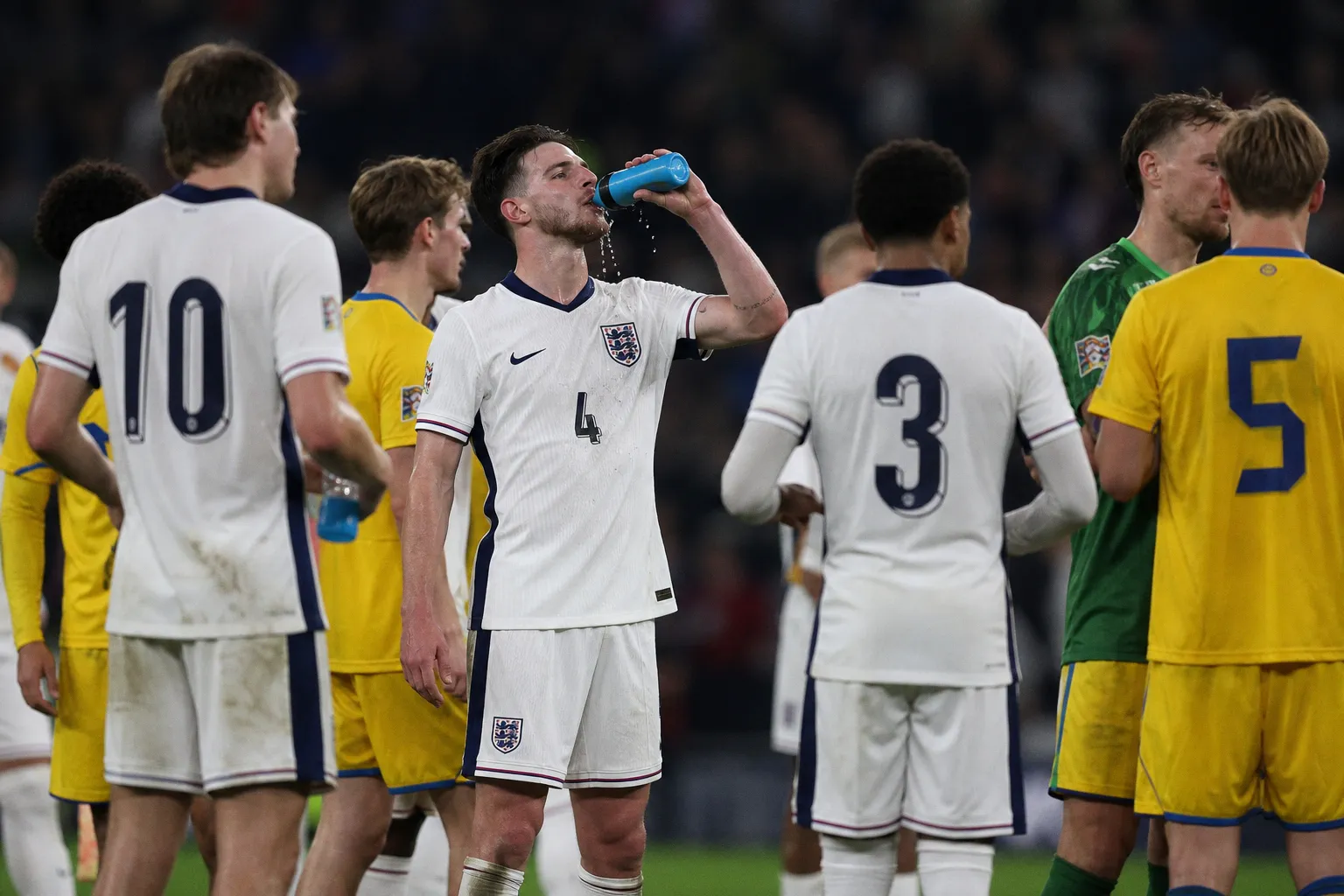
Heat will be the first tactical constraint in England’s quarter-final against Norway in Miami. The Athletic, via The New York Times, reports that temperatures are expected to reach 92F (33C), with humidity making the pitch feel hotter.
The match state starts before kick-off
England have already dealt with altitude against Mexico in the previous round. Miami presents a different load profile: heat plus humidity, where the body works harder, sweating increases, core temperature rises and perceived exertion climbs earlier.
The key point from Alan McCall’s performance analysis is that neither side gets a clean environmental edge. Both teams must operate under the same heat stress. That pushes the contest toward management rather than bravado: when to press, when to delay, when to circulate possession, and when to conserve legs for the decisive acceleration.
This is where tournament football becomes a usage-rate problem. A winger who spends early possessions chasing lost causes may pay for it later in the final third. A full-back who overlaps on every trigger may be less available for the recovery run. In normal conditions, those actions are part of the game model. In heat, they become costed events.
Sprint economy becomes a selection tool
The most useful data point comes from the 2014 World Cup. In the hottest matches, classified by wet-bulb globe temperature — a measure combining temperature, humidity, wind and solar radiation — players performed around 10 per cent fewer sprints than in lower heat-stress matches. Across a full team, that equated to roughly 40 fewer sprint efforts over a match. High-intensity running also dropped, while jogging and walking increased.
That does not mean players simply “try less.” It means the game shifts into a lower-frequency, higher-value sprint economy. Coaches and players have to protect the premium actions: the press after a poor touch, the recovery run into the channel, the burst across the six-yard box, the counter-press immediately after losing possession.
Per Mertesacker’s memory from Germany’s 2014 World Cup win in Brazil is instructive. He recalled changing even goal celebrations, staying back near the goalkeeper to recover and rehydrate instead of sprinting 70 or 80 metres up the pitch and then having to reorganise defensively. That is not sentimentality; it is load management inside live match conditions.
For England and Norway, the same logic applies. The smartest players will trim dead metres. Centre-backs should avoid celebration sprints that compromise the next defensive phase. Midfielders need to choose when to jump into pressure rather than treating every backward pass as a pressing cue. Forwards must distinguish between a press that can trap play and a press that only burns fuel.
The practical verdict: control the controllables
Alex Oxlade-Chamberlain’s recollection from Brazil adds the psychological layer: heat and humidity do not only hit the legs; they influence anticipation. Players begin expecting the game to feel harder, and that can alter risk selection before fatigue fully arrives.
That is why the best strategy is not one magic cooling trick. Based on the available evidence, the practical hierarchy is simple: use stoppages to recover and rehydrate, remove unnecessary sprinting, pace pressing phases, and save high-intensity actions for moments with clear tactical return.
For viewers, this is also the lens for judging performances. A slower tempo will not automatically indicate poor mentality or weak conditioning. In these conditions, lower sprint frequency can be rational. The question is whether the reduced running is organised: compact distances, clean rest defence, fewer isolated chases, and better timing in the half-spaces.
The same caution applies to any assumption that one model will dominate forever, whether in football tactics or debates about USD-backed stablecoins dominating the market. Conditions change the value of a strategy.
My film-room read: the side that wins the heat battle will not be the one that runs most. It will be the one that spends its sprints with the highest expected return.