Grand Slam Tournaments Ranked from Easiest to Hardest
There's no official leaderboard. The ITF doesn't publish a "hardest major" score. The ATP and WTA don't hand out a difficulty trophy for the Australian Open, Roland-Garros, Wimbledon, or the US Open.
So when someone lines these four up from easiest to hardest, they're not pulling from a governing body — they're building a conditional model based on surface, format, weather, and the body you're bringing to the fight. That's the honest starting point. The 2026 Grand Slam Rule Book just confirmed it: the things that used to differ tournament-to-tournament are now standardized. What changes is everything underneath.
The Myth of the Universal Difficulty Ranking
Look, I've been on the practice court at six in the morning with the sun already cooking the concrete. I've trained through tournaments where the ball flew off the string in the first set and died in the third. And I've watched players — and been one of them — treat one Slam like a holiday and the next like a war. The takeaway is simple: anyone telling you a Slam is universally easy or hard is selling you a take, not a fact.
The hard truth is that there's no governing-body metric that ranks the four majors by difficulty. No ITF study, no ATP formula, no WTA ranking. Court-speed charts exist, but they move year to year with the balls, the paint, the weather, the altitude, and how the grounds crew prepared the surface that morning. The same Roland-Garros clay that played sluggish and heavy in week one can turn bouncier by week two if the sun stays out and the dry heat bakes the top layer. Wimbledon grass gets slicker as the tournament grinds on, but a damp morning can slow it back down. Melbourne hard courts can play completely different at 6 p.m. than they do at noon.
"There's no objective difficulty score for a Grand Slam. There's only the surface, the weather, the draw, and the legs you brought with you."
So any ranking I build here is conditional. It's a snapshot through a specific lens — surface fit, physical load, draw luck, weather risk. If your lens is different, the order shifts. That's not a cop-out. That's the job.
Standardized Rules vs. Variable Playing Conditions
Here's what the 2026 Grand Slam Rule Book did: it leveled the structural playing field. Every Slam now runs a 128-player singles main draw. Every Slam runs a 128-player qualifying draw. Doubles main draws cap at 64 teams. Men's singles main-draw matches are best of five sets. Every other match — women's singles, doubles, mixed, qualifying — is best of three unless an event decides otherwise. And the final set, whether it's the fifth in men's or the third in women's, ends with a 10-point tiebreak.
Champions get the same reward everywhere: 2,000 PIF ATP Rankings points. Same number. Same currency. Same career impact.
What the rule book didn't standardize:
- Surface (hard, clay, grass — and sub-types within each)
- Ball (brand, pressure, felt type — different at every major)
- Climate (Melbourne summer, Paris spring, London summer, New York late summer)
- Altitude and air density (Paris and London sit higher than NYC; Melbourne swings wildly)
- Daily weather risk (rain delays, heat rule, wind)
- Preparation (how the grounds crew cuts, waters, rolls, and grooms the court in the hours before play)
So on paper, equal. Under the surface, completely different animals. That's where the real ranking work happens.
Surface Dynamics: From Melbourne Hard Courts to Wimbledon Grass
This is where the gloves come off. The surface is the single biggest variable the rule book can't touch, and each Slam has its own personality. But here's the catch: pace is conditional. The same surface can play slow or fast depending on the weather, the ball, the preparation that morning, and how deep you're into the draw. No Slam wears one fixed speed tag for the whole fortnight.
Australian Open — Greenset cushion-acrylic hard court. Melbourne Park runs 33 hard courts and 6 clay courts, but the show runs on the hard. Greenset's cushion-acrylic is medium-fast out of the box, true to bounce, and plays relatively neutral — but the heat in January can shift that. Daytime furnace conditions let the ball fly off the string. Night sessions drop the temperature and the ball settles into a slower, heavier rhythm. Two different tournaments on the same surface, depending on the slot.
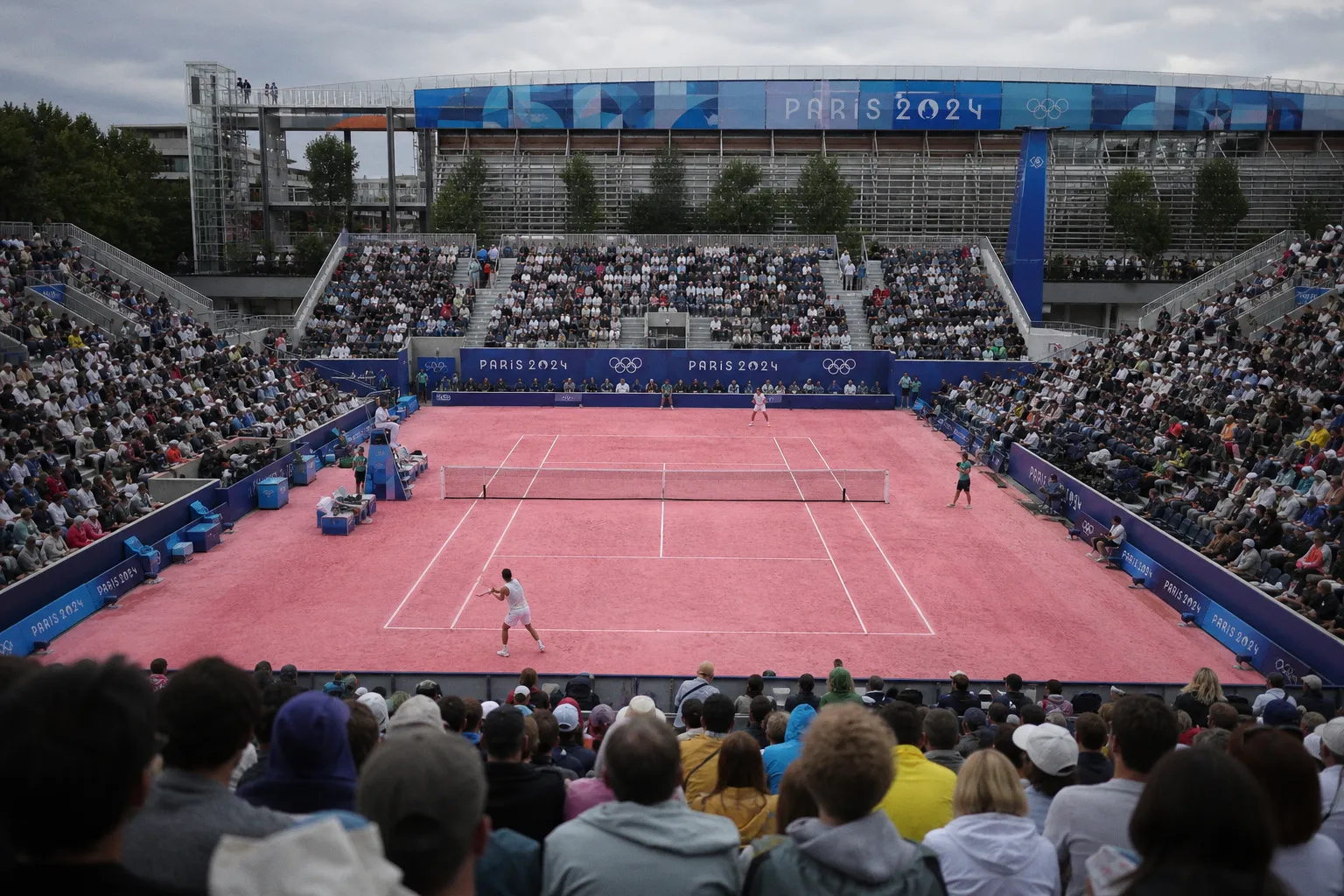
Roland-Garros — European red clay. Under typical Paris spring conditions — cool mornings, damp clay, fresh roller passes — Roland-Garros plays as the slowest major surface in the book. The ball sits up, rallies extend, footing becomes the whole game. But that "slowest" label is conditional on the day. Heat dries the clay and the court gets bouncier, the ball moves faster through the air, and the rallies shorten. Rain makes the ball stay lower and pulls rallies out longer. A new batch of balls can speed the court up; old, fluffy balls slow it back down. Clay is a living surface, and Roland-Garros is its cathedral — but the cathedral changes its mood every afternoon. Players who grind from the baseline and slide into their forehands live here. Big flat hitters tend to suffer, except when the sun bakes the clay into something faster.
Wimbledon — 100% perennial ryegrass, cut to 8 mm. On day one, with fresh ryegrass, dry weather, and the grounds crew's morning cut, Wimbledon can play as the fastest major surface in the book — low bounce, skiddy ball, serve-and-volley heaven. But that speed is conditional too. By week two, the grass wears down, the baseline opens up, the rallies lengthen, and the bounce sits higher. Rain softens the court and slows everything down. Sun and wind dry it out and turn serves into bullets. The 8 mm cut is the baseline, but the daily preparation — mowing height, watering schedule, the firmness under foot — shifts the pace hour by hour. Grass is the most variable surface in the calendar, even within a single tournament.
US Open — hard court (Laykold family, per the 2020 announcement). The exact 2026 surface specification wasn't verified by an official newer source, but the baseline is a medium-paced hard court that plays true. Late-summer New York heat and humidity make this the physically punishing Slam. The ball gets heavy in the air. Long rallies feel longer. Night sessions under the lights are where the title often gets decided — and that's also where the surface can flip faster or slower, depending on the balls and the air.
| Slam | Surface | Pace Profile (Conditional) | Ball Behavior | Key Variable |
|---|---|---|---|---|
| Australian Open | Cushion-acrylic hard (Greenset) | Medium-fast in mild conditions; speeds up in heat | True bounce; flies in heat, settles at night | Daily temperature swing |
| Roland-Garros | Red clay | Slow under cool, damp conditions; speeds up when dry | Sits up; rallies extend; weather-sensitive | Drying heat, rain, ball batch |
| Wimbledon | Perennial ryegrass, 8 mm cut | Fast on day one with fresh cut; slows as grass wears | Skiddy early, opens later; rain slows, sun speeds | Wear, weather, daily preparation |
| US Open | Hard court (Laykold-era) | Medium, true; humidity can slow it down | Heavy in humidity; lighter at night | Heat, humidity, night air |
If you're a serve-volleyer or a flat ball-striker, Wimbledon on day one is your easiest path to a title and Roland-Garros under cool, damp skies is your nightmare. If you're a grinder with a heavy forehand, flip that. The surface doesn't make a Slam hard. It makes a Slam hard for you — and only on the days the conditions line up with your game.
The Physical Toll of Best-of-Five Sets in the Modern Era
Here's the asymmetry the rule book quietly baked in: men's singles main-draw matches are best of five. Everything else is best of three. The men's qualifying draws, the women's draws at every stage, the doubles — all best of three unless an event chooses otherwise. The 10-point tiebreak in the final set caps the marathon, but it doesn't shorten the road to it.
What does this mean in the body?
For men, a deep run at any Slam is a war of attrition. Five-set matches in the second week are not rare — they are routine. The legs, the lungs, the shoulders, the mind: every asset gets tested over two weeks of best-of-five combat. Add travel between hemispheres and surfaces, and you're looking at a macro-cycle that punishes any weakness in the gas tank. The player who survives is rarely the most talented in the draw. It's the most durable.
For women, the best-of-three format keeps the physical load tighter, but the depth of the modern WTA means the best-of-three matches are increasingly brutal. Three-hour, three-set fights are no longer outliers at the Slams. The format is shorter, but the intensity is no joke.
So if you're building a difficulty model and you care about pure physical load, men's tennis at any Slam carries a heavier load than women's tennis at the same Slam — by format, not by effort. That's not a value judgment. That's the rule book talking.
How Draw Strength and Weather Influence Tournament Outcomes
Surfaces and format are the stable inputs. Draws and weather are the chaos variables. They decide Slams more often than anyone wants to admit.
Draw strength. Every Slam draws 128 players. No governing-body source confirms that one tournament's draw is consistently weaker or stronger than another's. The seeding rules are identical across the four. What changes is the field: who's healthy, who's peaking, who's chasing ranking points, who's playing through injury. A top seed landing in Djokovic's quarter, or Alcaraz's, or Swiatek's half, is a different tournament than one with a softer path. The draw is luck. The draw is everything.
Weather. This is where the rule book can't protect you.
- Melbourne, January. Heat waves can push daytime temperatures past 40°C. The heat rule (a 10-minute break between sets when conditions cross the threshold) is a safety valve, not a normalizer. Night sessions are the escape hatch.
- Paris, late May to early June. Spring weather is unpredictable. Cold, wet mornings turn clay heavy and slow. Hot afternoons dry it out and the ball jumps. Rain delays stack matches and wreck recovery.
- London, late June to mid-July. Wimbledon weather before the Championships and during it changes how the grass plays. Damp courts slow down. Hot, windy days turn serves into bullets. The 8 mm ryegrass reacts to every shift.
- New York, late August to mid-September. The US Open hits peak summer humidity. The ball feels heavy. The air feels thick. Night sessions under the lights are often cooler, faster, and kinder to servers.
If you're modeling difficulty, you need a weather probability for each Slam. It's not part of the rule book, but it's part of the fight.
The Honest Verdict
So where does that leave us? Here's my conditional ranking, sorted easiest to hardest for a baseline ATP-level grinder with no extreme surface preferences, playing a full calendar. Adjust your own lens — and adjust your year, because conditions shift.
1. Australian Open — easiest, on average. Medium-fast hard court under typical conditions, true bounce, predictable conditions within the day, generous recovery windows between matches. Best-of-five still applies to men, but the surface doesn't grind you down the way clay or grass does. Draw luck and heat are the wild cards.
2. US Open — tough but fair. Hard court, medium pace, brutal late-summer conditions that punish the legs and the lungs. If you can't handle heat and humidity, this jumps above the Australian Open in a hurry. Night sessions level the playing field.
3. Wimbledon — hard, but specialized. Fast grass on day one with fresh cut, low bounce, weather-dependent surface that changes by the hour — but that "fast" only holds when the courts are fresh and the weather cooperates. By week two, the baseline opens up and the rallies lengthen. If you're a server, easier. If you're a grinder, week two becomes survival mode. The 8 mm ryegrass doesn't lie — it just gets faster and lower until you adjust, or slower and softer if the rain comes.
4. Roland-Garros — hardest, on average. Clay under cool, damp conditions, high bounce, and the format doesn't let you shortcut your way through. Best-of-five in the men's main draw combined with the longest rallies in tennis is the toughest two-week grind on the calendar — assuming the weather stays cool and the clay stays slow. Heat drying the clay is your only friend, and even then, the surface will punish impatience. If the sun bakes the clay all fortnight, the whole ranking shifts.
For a flat-hitting server, that list flips — Wimbledon on a dry day one jumps to the top and Roland-Garros stays put. For a heavy grinder with a loopy forehand, Roland-Garros climbs to easiest and Wimbledon stays punishing. The ranking is the lens, not the tournament.
"No Grand Slam is universally hard or easy. The ranking is yours to build — surface, body, format, weather, draw. Everything else is commentary."
The rule book gave us equal draw sizes, equal ranking points, equal formats on paper. The court, the air, and your legs gave us the rest. Build your own model. Just know what you're building it on.