How Data-Driven Analytics Are Transforming Modern Sports Performance and Fan Engagement
According to openPR.com, data-driven performance strategies and digital fan engagement are accelerating growth in the sports analytics market.
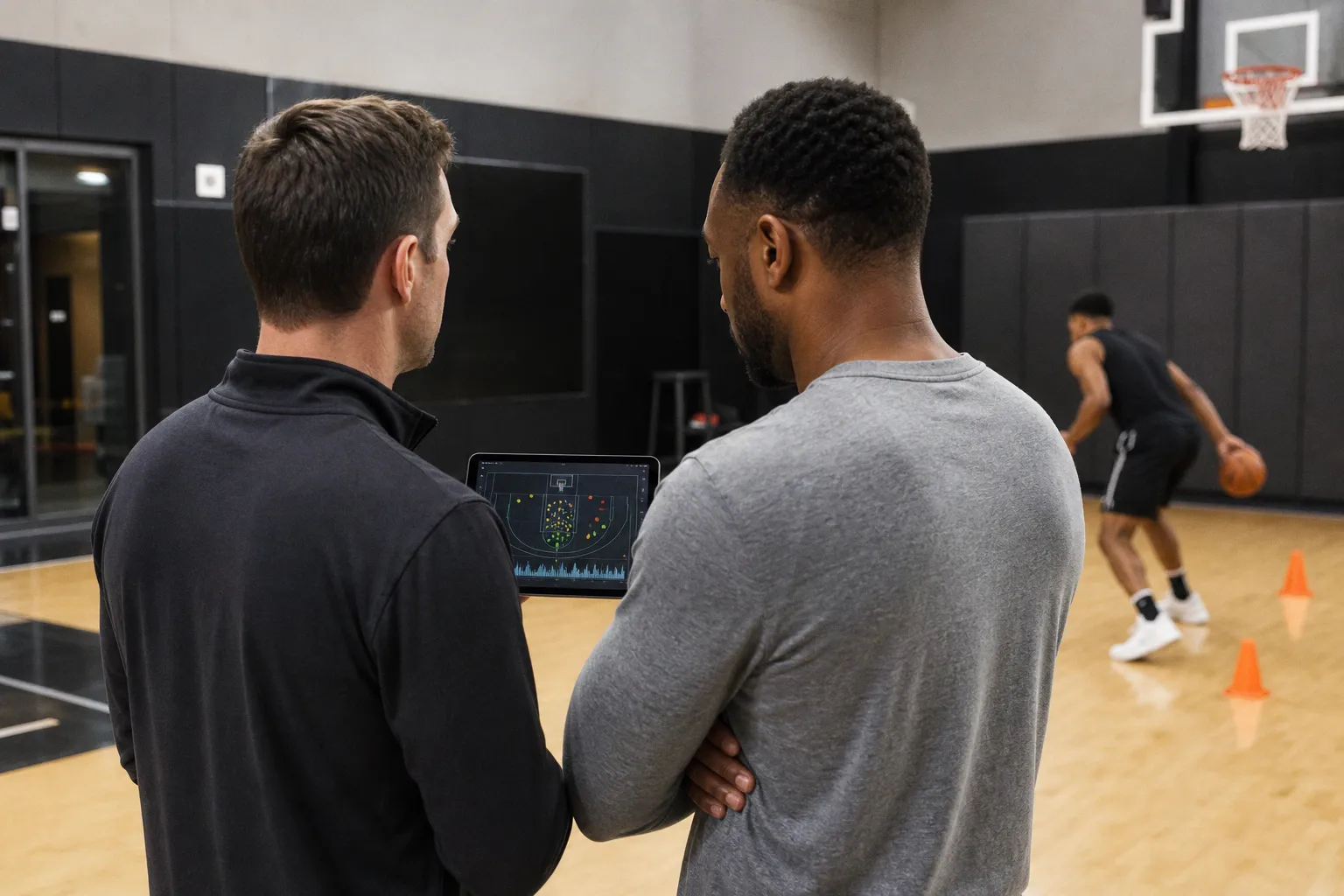
The signal matters less as a forecast than as a reminder of where modern competitive infrastructure is being built: around repeatable measurement, not isolated highlight plays. For NBA players and development staffs, the useful question is whether a data layer changes a training decision, a lineup decision, or a recovery decision.
The available report headline does not identify specific platforms, teams, athletes, or performance results. That limitation is material. Analytics should be judged by the quality of the decision it improves—not by the volume of tracking data it produces.
Performance data only has value at the decision point
On court, a usable model starts with a defined possession problem. A guard’s pull-up efficiency against drop coverage, a wing’s shot profile from the half-spaces, or a center’s ability to protect the rim without conceding corner threes can all be mapped—but only if the staff can connect the metric to film and an actionable adjustment.
That distinction separates useful analysis from dashboard theater. A player may have a strong raw scoring output while carrying a low-efficiency usage profile in particular coverages. Conversely, an apparent dip in shooting can be less relevant if the player is creating higher-value looks for teammates. The data point is the entry frame; the possession context determines whether it should alter the plan.
For individual athletes, the practical filter is narrow: track metrics that correspond to a specific intervention. If a number cannot explain what changes in footwork, shot selection, spacing, workload, or recovery, it is not yet a training tool.
Fan engagement is part of the same operating model
OpenPR’s framing places digital fan engagement alongside performance strategy. These are distinct functions, but they increasingly use the same basic asset: structured information around the game. Performance analysis breaks down actions within possessions; digital products can organize how supporters follow those actions, teams, and competitions.
Philstar.com separately reports that a Cebu sports app is eyeing expansion across Southeast Asia. The available headline provides no details on the app’s product, user base, or rollout plan. Still, it reinforces the broader market direction: sports technology is not limited to elite training environments, and audience-facing platforms are also seeking scale.
For a player’s public profile, that creates a more technical standard than simply posting clips. The durable material is the explainable sequence: the matchup, the coverage, the adjustment, and the result. A fourth-quarter make has greater analytical value when viewers can see whether it came from rejecting a screen, exploiting a late switch, or forcing a defender out of drop position.
What to monitor before buying the growth narrative
EIN News reports that the youth sports market is set for rapid expansion, citing a 10.4% compound annual growth rate through 2030. The headline does not establish how that growth will distribute across coaching, facilities, software, wearables, or competition formats. It should not be treated as proof that every analytics product will improve development.
The sharper test is operational. Does a tool produce reliable inputs? Can coaches explain its outputs to athletes? Does it reduce uncertainty around workload or tactical usage? And does it hold up when checked against game film rather than a single composite score?
The market case is clear only at the highest level: data-led performance systems and digital sports products are drawing attention. The ceiling for any individual platform, athlete program, or fan app remains dependent on translation. Data becomes competitive only when it produces a better next possession, a better next session, or a clearer way to understand both.