UFC Weight Classes: Limits and Division Competitiveness
The first meaningful exchange in many UFC bouts happens before anyone throws a jab.
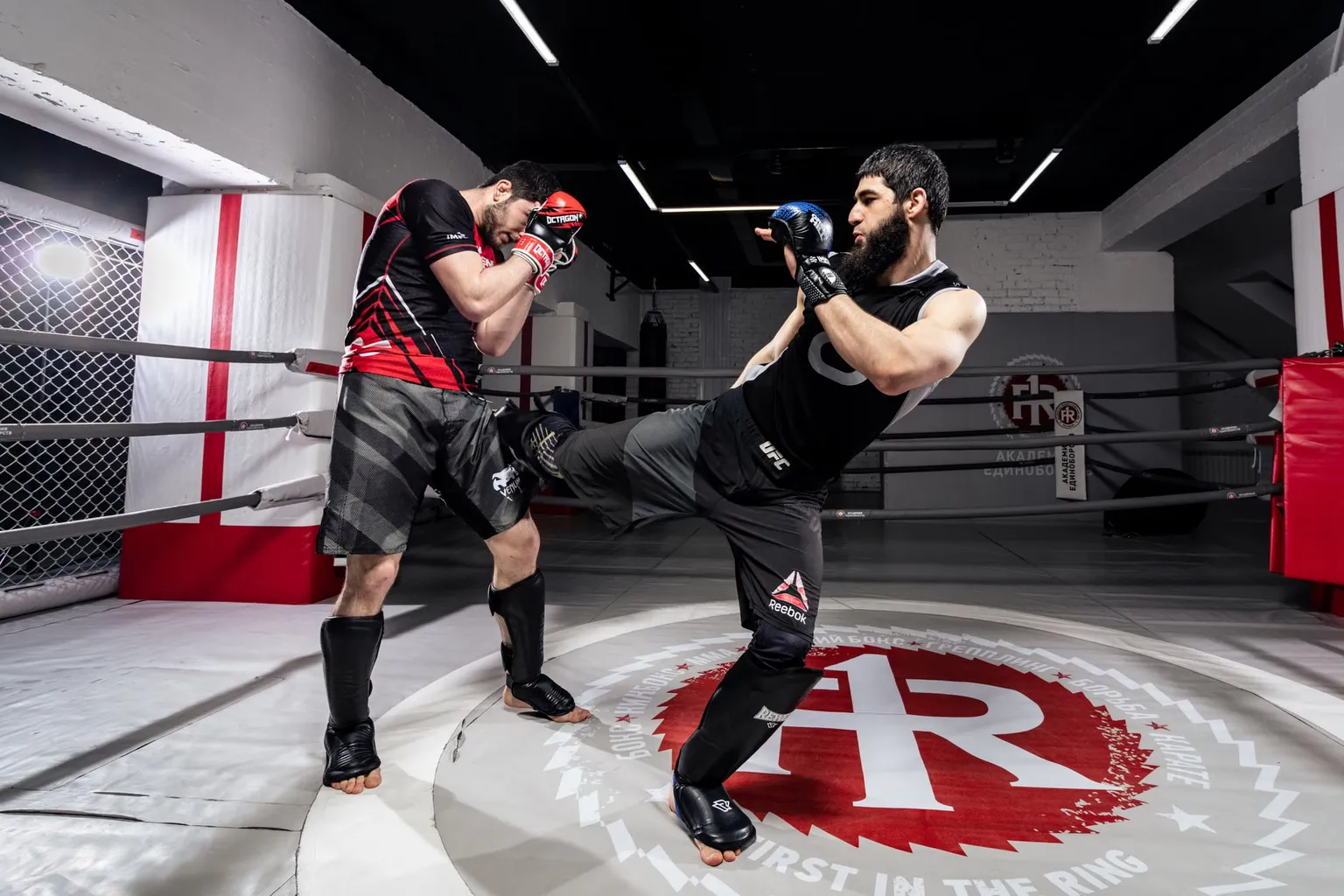
All UFC weight classes exist to make combat less chaotic and more legible, but they do not make it simple. A flyweight who weighs in at 125 pounds may enter the cage with the density and force of someone significantly heavier. A welterweight can spend Friday morning looking emptied out and Saturday night moving with startling rotational power through the hips. The division listed on the bout agreement is only the visible edge of a much more intricate biomechanical and psychological arrangement.
The UFC divisions list: the frame every fight lives inside
The UFC currently recognizes eight men’s weight divisions and four women’s divisions. The sequence looks tidy on paper, almost clinical, but each bracket has its own movement language. The lighter classes tend to reward speed, repeatable entries, and recovery between scrambles; the heavier classes punish one misread with a finality that changes the temperature of the room.
Here are the UFC weight classes in order, from lightest to heaviest.
| Division | Men’s limit | Women’s limit | Competitive texture |
|---|---|---|---|
| Strawweight | — | 115 lb / 52.2 kg | High pace, layered striking, long clinch sequences, narrow margins |
| Flyweight | 125 lb / 56.7 kg | 125 lb / 56.7 kg | Speed, transitions, cardio depth, fast tactical recalibration |
| Bantamweight | 135 lb / 61.2 kg | 135 lb / 61.2 kg | Dense talent pools, explosive exchanges, wrestling-striking blends |
| Featherweight | 145 lb / 65.8 kg | 145 lb / 65.8 kg | Range management, kicking games, sharp counterpunching |
| Lightweight | 155 lb / 70.3 kg | — | Perhaps the sport’s most unforgiving blend of speed, power, and depth |
| Welterweight | 170 lb / 77.1 kg | — | Physical clinch work, measured pace, heavy transitional grappling |
| Middleweight | 185 lb / 83.9 kg | — | Long frames, knockout threat, tactical patience under pressure |
| Light Heavyweight | 205 lb / 93.0 kg | — | Power striking, athletic variance, decisive momentum swings |
| Heavyweight | 206–265 lb / 93.4–120.2 kg | — | Maximum consequence, reduced error tolerance, broad body-type spectrum |
The table is clean; the sport is not. A 10-pound gap between bantamweight and featherweight may look modest to a casual observer, but inside a training room it can mean different sparring partners, different nutritional stress, different leverage in the clinch, and a different relationship with fatigue. Five pounds at strawweight can feel like a canyon. Fifteen pounds between lightweight and welterweight can decide whether an athlete’s best weapons arrive fresh or arrive late.
A weight class is not just a number. It is the corridor through which an athlete’s technique has to travel.
That is why a fighter’s division choice is rarely just “where they can make weight.” It is where their kinetic chain still works under duress. Can they rotate through the trunk after a hard cut? Can they sprawl twice in a minute without the calves deadening? Can they absorb body work after rehydration? The best camps do not ask only whether the athlete can reach the limit. They ask what is left afterward.
Men’s UFC weight classes: where the technical profiles shift
The men’s divisions run from flyweight at 125 pounds to heavyweight, capped at 265. That span covers completely different athletic ecosystems.
At men’s flyweight, the pace can feel almost insolent. Fighters reset angles quickly, chain takedown attempts without theatrical loading, and punish hesitation before the audience has fully registered the opening. The best flyweights do not merely move fast; they make decisions fast. Their stance switches, level changes, and hand-fighting sequences happen with an economy that looks almost frictionless.
Bantamweight, at 135 pounds, has become one of the sport’s most brutally competitive neighborhoods. The athletes are still fast enough to operate in high-volume exchanges, but the power has a more sobering quality. A bantamweight contender usually needs more than one dominant skill. Clean boxing without takedown defense gets interrogated. Wrestling without striking entries gets stalled at range. Kicking games without pocket awareness get countered.
Featherweight at 145 often stretches the geometry of the cage. Longer athletes can build offense behind kicks and jabs, while compact pressure fighters try to collapse distance before that range becomes a cage of its own. This is where foot placement starts to tell a larger story: outside lead foot battles, pivots off the fence, the ability to exit after a combination rather than admiring it.
Lightweight, at 155, remains the division I tend to watch with the least relaxation. It has the cruel balance of everything: hand speed, punching power, wrestling depth, scrambling literacy, and enough physical size that body shots and clinch knees alter the bout’s metabolism. A merely good lightweight can look ordinary because the division gives him no soft place to stand.
Welterweight at 170 brings a different kind of compression. The athletes are large enough for clinch control to become visibly draining, and the wrestling exchanges carry a heavier tax. Underhooks matter everywhere, but at welterweight they can look like ownership documents. The best fighters here often manage energy with a kind of mature severity: fewer wasted flurries, more positional insistence.
Middleweight at 185 is where length and timing become particularly expressive. You see more long levers, more intercepting knees, more fights decided by the half-step that turns a reaching punch into a countering opportunity. At light heavyweight, 205 pounds, the margin narrows again; a technically imperfect strike can still rearrange a fight if it lands with full structure behind it.
Then heavyweight, officially 206 to 265 pounds, sits apart. It is the only UFC division with an upper cap rather than a single maximum limit shared in the same way as the other classes. Heavyweights are not all the same kind of large. Some are dense and explosive, some rangy and patient, some carry mass that becomes both weapon and burden. The division’s charm and danger come from that variance.
Women’s UFC weight classes: smaller range, sharp distinctions
The women’s UFC weight divisions are strawweight, flyweight, bantamweight, and featherweight: 115, 125, 135, and 145 pounds. The smaller list should not be mistaken for a simpler competitive map.
Women’s strawweight is one of the sport’s most technically watchable divisions because the margins are so tight. A slight delay on the exit, a lazy return of the kicking leg, a collar-tie accepted for two seconds too long — these small details accumulate. The division often rewards layered striking and disciplined defensive wrestling, because one clean takedown or one extended clinch sequence can swing a round without any melodrama.
Women’s flyweight, at 125 pounds, has grown into a compelling middle ground. There is more physicality than strawweight, but still enough pace for long combination work and prolonged grappling transitions. It is a division where athletic versatility matters enormously. A fighter who can jab, defend the shot, and win the second phase after the first scramble has a very different ceiling from someone who only wins clean, separated moments.
Bantamweight at 135 has historically carried a larger spotlight, and with it a wider range of body types and styles. Some athletes arrive as strong grapplers with top pressure; others lean on long boxing, clinch knees, or counterpunching. At featherweight, 145 pounds, the field is thinner, and competitiveness can be more dependent on matchmaking cycles and the availability of elite athletes who can naturally inhabit the class.
That distinction matters when evaluating “best” or “most competitive.” A division can have a famous champion and still lack depth. Another can have less casual attention but a far more punishing ladder from number fifteen to number five. Competitiveness is not glamour. It is the number of credible threats waiting in sequence.
The one-pound allowance, title fights, and why the scale is not symbolic
In non-title UFC bouts, fighters are typically allowed to weigh in one pound over the division limit. A lightweight non-title fighter may come in at 156. A bantamweight non-title fighter may come in at 136. That pound is not a loophole so much as a practical buffer in a sport where bodies respond imperfectly to travel, water manipulation, and the final hours of a cut.
Title fights are different. For a championship bout, the fighter must hit the exact divisional limit. No extra pound. The champion and challenger are held to the number that defines the belt.
That distinction changes fight week. It changes the anxiety in the hotel room, the rhythm of the final bath or sauna session, the tone between nutritionist and athlete, the way a coach watches the eyes rather than the scale. One pound can be the difference between a controlled descent and a panicked one.
The public often sees the ceremonial weigh-in — flexed, lit, performed. The real drama belongs to the official weigh-in, especially since the UFC adopted early weigh-ins in 2016 to give fighters more time to recover before competition. The intention is sensible: create a longer runway between the dehydrated body and the violent demands of the bout. But the existence of more recovery time does not make extreme cutting benign. It simply acknowledges that the old rhythm was asking too much of already-stressed systems.
Weight cutting is rapid dehydration in service of a contractual number. It can involve severe fluid restriction, heat exposure, and aggressive manipulation of the body’s short-term mass. Medical oversight has increased because the practice carries real risk. The sport has become more professional around it, but professionalism should not be confused with safety.
A camp that handles the cut well resembles a logistics operation as much as an athletic project: timing, transport, contingencies, and the final handoff all have to line up. The same principle appears outside sport in discussions of last-mile delivery for diverse shippers: the final stretch often looks simple from a distance, yet it is where planning either proves itself or fails. Fight week has its own last mile, and it is measured in ounces, sleep, and composure.
The heavyweight exception: freedom with a ceiling
Heavyweight is frequently described as the open division, but that is only partly true. The UFC heavyweight class runs from 206 to 265 pounds. The upper boundary matters. It prevents the division from becoming an unlimited mass experiment while still allowing a wider range of bodies than any other class.
This creates a peculiar strategic spread. A 235-pound heavyweight may be giving up size but gaining speed, repeatability, and a better gas tank. A 265-pound heavyweight may have clinch gravity, punching force, and the ability to make every frame of contact expensive. Neither profile is automatically superior. The bout often turns on whether the lighter athlete can keep the contest in motion without being trapped, or whether the larger athlete can make the smaller one carry weight.
At heavyweight, biomechanics become bluntly visible. A missed punch is not just a missed punch; it is a large rotational commitment that may pull the fighter out of stance. A failed takedown attempt can cost half a round’s worth of oxygen. Even a checked kick lands with a different thud. The division is sometimes mocked for slower pace, but that critique misses the obvious: moving that much mass under threat is metabolically expensive.
The best heavyweights are not merely big men with power. They are athletes who can preserve structure while tired. They keep the rear hand responsible during entries. They do not let their feet cross when retreating. They understand that at 265 pounds, balance is defense.
Heavyweight is the division where one error can erase ten minutes of good work, which is why patience there is not dullness; it is survival intelligence.
Which UFC divisions are the most competitive?
There is no permanent answer, because divisions breathe. Champions age. Prospects arrive. Injuries interrupt ladders. Matchmaking opens and closes doors. Still, several patterns hold if we judge competitiveness by depth, stylistic variety, and the number of athletes capable of punishing a narrow weakness.
Lightweight is usually the safest answer for the men’s side. The 155-pound class sits at the rare intersection where athletes are fast enough for layered technique and large enough for every exchange to carry real damage. The division has historically been crowded with fighters who can wrestle, strike, scramble, and maintain pace. You do not survive there on one gift.
Bantamweight deserves equal respect. At 135, the talent density is severe, and the tactical diversity is rich: pressure boxers, reactive wrestlers, switch-stance kickers, submission threats, and hybrids who can shift identities between rounds. Because the athletes can sustain a high pace, technical errors are exposed repeatedly rather than occasionally.
Women’s strawweight is often the most technically compact women’s division. The lighter weight produces long stretches of active engagement, and because finishing power is not always the central separator, round-winning details matter: jab quality, cage exits, clinch pummeling, top-control urgency, and the ability to win the final minute without overreaching.
Women’s flyweight has become increasingly competitive because it offers enough size for physical authority while preserving speed and volume. It is also a natural landing place for athletes who struggled to make strawweight cleanly or found bantamweight too physically costly. That movement between divisions can deepen the pool.
A useful way to compare division competitiveness is not to ask, “Who is the champion?” but rather, “How many different problems must a contender solve before reaching the champion?”
| Division | Depth | Style variety | Physical penalty for mistakes | Overall competitiveness |
|---|---|---|---|---|
| Men’s Lightweight | Very high | Very high | High | Elite |
| Men’s Bantamweight | Very high | Very high | Medium-high | Elite |
| Men’s Welterweight | High | High | High | Strong |
| Women’s Strawweight | High | High | Medium | Strong |
| Women’s Flyweight | Rising/high | High | Medium | Strong |
| Heavyweight | Variable | Medium | Extreme | Volatile rather than consistently deep |
The word “volatile” is not a criticism. Heavyweight competitiveness has a different character. A thinner technical field can still produce dangerous fights because power compresses probability. A heavyweight contender may not need to win every minute if he can alter the bout with one clean connection. At lightweight or bantamweight, the path is often less forgiving in a different way: you must win exchanges, transitions, and adjustments against opponents who can keep asking new questions.
Weight cutting and the false comfort of division labels
The most misunderstood part of UFC weight limits is that they are weigh-in limits, not necessarily fighting weights. It would be wrong to say all fighters in a division weigh exactly that amount in the cage. Many athletes walk around above the limit and cut down to make the contracted class, then rehydrate before competing.
This is where competitive fairness becomes complicated. Weight classes are designed to prevent enormous disparities, but weight cutting creates a shadow contest: who can safely — or at least successfully — descend furthest and rebound best? The athlete who cuts more is not automatically advantaged. A hard cut can flatten footwork, dull reaction time, weaken the chin’s recovery response, and turn third-round decision-making into fog.
I have watched fighters in open workouts look magnificent on Wednesday: loose shoulders, crisp hip rotation, relaxed breathing after combinations. Then by Friday morning the same athlete appears reduced, not in courage but in available electricity. The eyes sit deeper. The voice gets quieter. Movements become economical because the body is protecting itself. By Saturday, some return almost completely. Others only seem to.
That is the hidden variable behind many fights. A game plan built around pressure requires legs. A wrestling-heavy approach requires repeated drive, grip, and posture. A kicking game requires balance and elasticity through the hips. If the cut has stolen too much from any link in that chain, the technique may still be remembered by the mind but unavailable to the body.
This is why division moves can transform careers. Going up ten or fifteen pounds may surrender size advantage but restore durability, output, and mental clarity. Moving down may create reach or strength advantages but impose a tax that shows up late. The right class is not always the lowest possible class. Often, it is the lightest class where the athlete can still be fully themselves.
How to read a fighter’s division choice
When assessing a UFC athlete’s weight class, I look less at the number and more at the pattern around it.
First, does the fighter’s style depend on pace? If yes, a brutal cut is especially costly. Pressure fighters, scramble-heavy grapplers, and volume strikers need repeated bursts. They cannot afford to spend the first round looking powerful and the third round negotiating with their own legs.
Second, does the fighter rely on durability? Some athletes build their identity around absorbing one to land two. That is a dangerous bargain after severe dehydration. Even with recovery time, the relationship between cutting and resilience is too serious to dismiss.
Third, does the athlete’s frame fit the division? Not height alone, but shoulders, reach, muscle distribution, and how they manage clinch contact. A long lightweight who can make 155 cleanly may enjoy range advantages. The same athlete, depleted, may lack the strength to keep opponents off the hips.
Fourth, how does the fighter look after misses and resets? This is where the truth often appears. Anyone can look sharp during a prepared combination. The body reveals itself after a stuffed shot, a missed overhand, a hard kick checked on the shin, a scramble that ends nowhere. If the stance returns quickly, if breathing stays nasal and controlled, if the eyes remain organized, the weight process probably did not take too much.
The scale tells us eligibility. The fight tells us cost.
The current shape of the UFC weight-class landscape
All UFC weight classes are compromises between fairness, spectacle, athlete safety, and roster reality. More divisions could reduce the pressure to cut extreme amounts, but they could also dilute talent pools if added without sufficient depth. Fewer divisions would sharpen prestige but increase physical mismatches. The recurring conversation around additional classes — such as a potential 165-pound division — reflects a real competitive tension, but future changes remain organizational decisions, not settled facts.
For now, the structure is clear: eight men’s divisions, four women’s divisions, exact limits for title fights, a typical one-pound allowance for non-title bouts, and a heavyweight ceiling at 265 pounds. Around that structure lives the more human truth of the sport: athletes negotiating with their bodies to enter a cage at the most advantageous possible version of themselves.
The best divisions are not merely those with the biggest names. They are the ones where excellence has to be proven in multiple dialects: striking under threat of takedowns, wrestling against opponents who can stand back up, cardio under damage, patience under noise. By that measure, men’s lightweight and bantamweight remain the sport’s deepest laboratories, while women’s strawweight and flyweight offer some of the cleanest technical work on the roster.
The scale will always have its drama, but it should never be mistaken for the whole story. The number is the doorway. What matters is what the fighter can still carry through it: balance, timing, force, judgment, and the quiet mental fortitude to make the body obey when the bout stops being theoretical.