The Tennis Walk-On Look Is Sports’s Hot New Style Moment
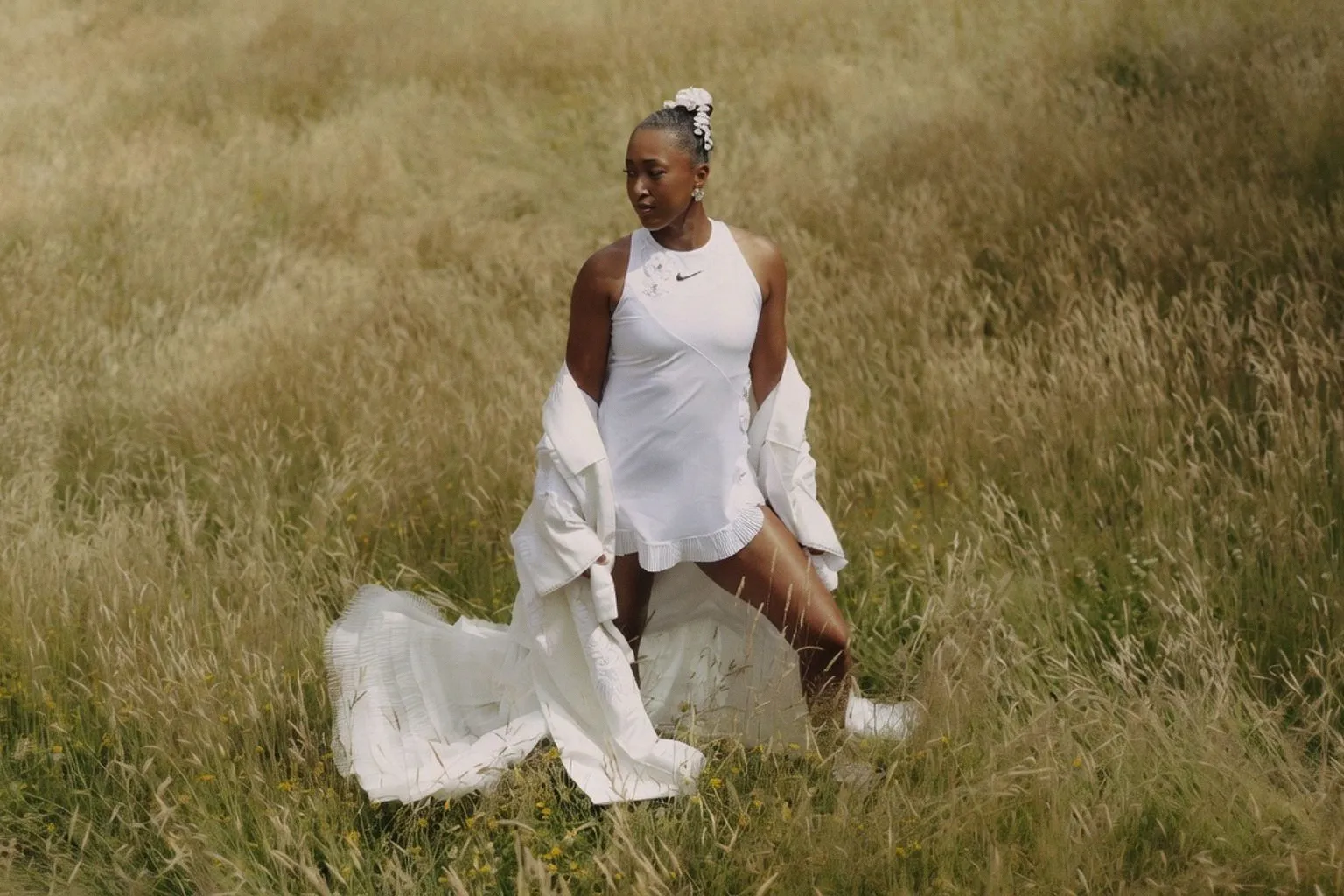
Naomi Osaka’s custom Hana Yagi walk-on gown at Wimbledon worked like a pre-match tactical trigger: it shifted attention before the first ball was struck.
The walk-on is becoming usable athlete space
The key detail is timing. Tennis gives players limited moments outside active play where personality, sponsor messaging and tournament codes can be expressed without interfering with points. The walk-on sits in that narrow corridor.
Osaka’s Wimbledon entrance, in a custom kimono-inspired Hana Yagi look created in collaboration with Nike, is the clearest example in the current cycle. Vogue frames it as a confirmation that the tennis walk-on has become the sport’s answer to basketball’s tunnel arrival. That comparison matters because the NBA and WNBA tunnel walk already functions as a branded runway: athletes arrive, cameras lock in, brands receive clean visual inventory.
Tennis has a different court geometry and a stricter rhythm. There is no long tunnel culture built into every broadcast, and at Wimbledon the all-white dress code compresses the creative range. That makes the recent examples more instructive, not less. Taylor Fritz wore a bespoke white tailored Boss suit before facing Dušan Lajović, with Boss presenting the look as respectful of Wimbledon’s setting rather than a stunt. In practical terms, that is the template: use the constraint as the design brief.
The strongest looks still respect the competitive frame
The current wave is not limited to luxury labels. Coco Gauff debuted a New Balance x Miu Miu collaboration with a more fashion-forward version of the two-piece tennis set. Novak Djokovic wore an oversized Lacoste jacket with a hidden message visible when he removed it. Marta Kostyuk wore a lace Wilson ensemble inspired by her wedding dress. Osaka has also worked with Nike on her looks, according to stylist Marty Harper, and has previously worn Nike kits customized by Robert Wun.
The pattern is clear: the best walk-on concepts do not detach from the athlete’s equipment ecosystem. They extend it. That is the difference between a clean possession and a turnover. If a look blocks warm-up mechanics, conflicts with a sponsor, or reads as unrelated to the player’s on-court identity, the usage rate is high but the efficiency is low.
For teams advising athletes, the checklist should be simple. Does the piece comply with tournament rules? Can it be removed cleanly before play? Does it preserve the athlete’s existing sponsor map? Does it give broadcasters one readable visual cue rather than five competing ones? Those are the practical metrics, closer to shot selection than red-carpet styling.
There is also a broader sports-business read. Vogue notes that fashion investment in sport is increasing, with Formula 1 cited as one example: its female fan base reportedly rose from 37% to 42% over six years, and LVMH signed a 10-year agreement with the series in 2025 involving Louis Vuitton, Moët Hennessy and Tag Heuer. The same logic appears around football, where Jacquemus worked with Nike and the Fédération Française de Football on a Les Bleus capsule, while Willy Chavarria and Adidas Originals produced a line inspired by Mexico’s connection to the game.
What athletes should actually copy
The takeaway for tennis players below the Osaka-Gauff-Djokovic tier is not to chase couture. It is to understand the walk-on as a small but valuable controlled phase. Like a set-piece routine, it works only when the roles are defined.
A junior, college player or touring pro can apply the same principle at a lower budget: one consistent color system, a travel layer that photographs cleanly, footwear and bag choices that do not fight the kit, and no element that disrupts the pre-match warm-up. The goal is recognizability without creating drag.
For brands, the lesson is equally clinical. Tennis does not offer the same arrival tunnel volume as basketball, but it does offer higher ritual density. The player leaves the locker room, steps into a historic setting, removes the layer, and begins. That sequence has fewer frames, so each frame carries more value. It is the same logic analysts use when comparing linked signals in other markets, such as a five-year EUR/USD and gold correlation study: the relationship matters only if the data points move together often enough to be useful.
The ceiling for the tennis walk-on look is therefore not unlimited spectacle. It is a repeatable pre-match asset: compliant, sponsor-aligned, broadcast-friendly and connected to the athlete’s competitive identity. Osaka’s Wimbledon gown gave the trend its cleanest current signal, but the next phase will be decided by execution discipline, not volume.